

Takeaways
What is a rule engine?
A rule engine automates business decisions by evaluating predefined logic against data, separating rules from application code to allow fast updates.
Why are rule engines critical for modern business in 2026?
They enable real-time, scalable decision-making for enterprises facing rapid rule changes, high-volume operations, and evolving risk or compliance requirements.
How do rule engines work inside enterprise systems?
They use a repository of rules, a fact model, an inference engine, and an execution layer to process decisions dynamically at runtime.
What are the most common enterprise rule engine use cases in 2026?
Rule engines automate risk control, fraud detection, pricing, access control, and compliance enforcement across industries.
How is a rule engine different from a workflow engine or decision engine?
Rule engines evaluate conditional logic, workflow engines orchestrate processes, and decision engines combine rules with analytics for complex decisions.
What should enterprises look for in a rule engine in 2026?
Enterprises should seek flexibility, scalability, governance, integration, and professional support, such as offered by the GeeTest Business Rules Decision Engine.
What Is a Rule Engine?

A rule engine is a software system that evaluates predefined business rules against incoming data to automate decisions, allowing enterprises to separate business logic from application code and manage complex decision logic at scale.
At its core, a rule engine executes if–then logic (conditions and actions) based on structured rules. Instead of hard-coding policies into applications, organizations define rules independently and let the engine determine outcomes at runtime.
Key entities involved in a rule engine include:
- Business rules – explicit logic representing policies, thresholds, or decisions
- Facts – input data such as user attributes, transactions, or events
- Inference engine – the component that evaluates which rules apply
- Actions – results triggered when conditions are met
This separation makes rule engines particularly valuable in environments where business logic changes frequently, such as pricing, risk control, compliance, and customer eligibility.
Why Are Rule Engines Powering Modern Business in 2026?
Rule engines are essential in 2026 because they enable enterprises to react to rapid business changes, automate decision-making at scale, and support real-time, high-throughput operations that legacy systems cannot handle.
The Performance Gap: Why Legacy Systems Fail Modern Requirements?
Modern business has undergone significant changes that legacy systems struggle to address:
- High Velocity of Rule Changes: Business environments now demand rapid updates to policies and decision logic—often multiple times per day—due to promotions, pricing campaigns, seasonal demand, and regulatory changes. Legacy systems require lengthy development cycles to implement such changes.
- Sophisticated Fraud and Abuse Patterns: Evolving tactics such as credential stuffing, scalping bots, and SMS abuse compromise account security and transaction integrity while increasing operational costs. Traditional risk control systems, which lack real-time responsiveness and behavioral analysis, cannot keep up with these threats.
- High Volume and Concurrency Needs: High-traffic platforms, particularly e-commerce and SaaS systems, require rules that execute in real-time under heavy loads, where latency and throughput directly impact user experience and revenue.
For example, a major global e-commerce platform faced growing risk management challenges due to frequent marketing activities and rapidly changing business rules. Its legacy risk control system lacked real-time responsiveness and scalability, making it difficult to support high-concurrency decisions. Limited flexibility further hampered the platform’s ability to adapt to fast-changing threats, impacting both risk control efficiency and user experience.
Key Capabilities: How Modern Rule Engines Solve Complex Challenges?
Advanced rule engines address legacy limitations by providing a more resilient and responsive architecture:
- Real-time rule evaluation with low-latency decisions under high concurrency
- Dynamic thresholds and behavioral indicators—such as frequency, location, and time—applied to risk scoring and controls
- Adaptable frameworks that allow rapid configuration and updates without code deployment
- Integration with business processes for consistent enforcement across systems
By deploying a business rules decision engine, organizations can establish a real-time, adaptable risk control framework tightly integrated with core operations, enabling accurate detection and blocking of abnormal activities in high-risk scenarios like registration and transactions.
How Does a Rule Engine Work?
A rule engine works by continuously evaluating incoming data against a structured set of rules and executing the appropriate actions in real time or near real time.
What Are the Core Components of a Rule Engine?
A modern rule engine typically consists of a rule repository, inference engine, fact model, and execution layer that together evaluate conditions and trigger outcomes.
- Rule repository – stores and versions business rules
- Fact model – defines the data structure rules that operate on
- Inference engine – determines which rules apply
- Execution engine – performs actions such as approve, reject, score, or route
This modular architecture enables scalability and governance in enterprise environments.
How Are Rules Created, Managed, and Executed?
Rules are defined using structured logic, managed independently from application code, and executed dynamically at runtime based on contextual data.
In enterprise settings, rule lifecycle management often includes:
- Rule authoring (technical or business users)
- Version control and rollback
- Approval workflows
- Testing and staging
- Runtime monitoring
This lifecycle ensures that rules remain auditable, compliant, and adaptable.
What Are the Most Common Rule Engine Use Cases in 2026?
In 2026, rule engines are widely used across industries to automate decisions that require speed, consistency, and transparency.
Risk Control and Fraud Prevention
Rule engines enable real-time risk decisions by evaluating transactions, behaviors, and contextual signals to detect fraud, abuse, or anomalies. Examples include:
- Fraud detection in financial services
- Block suspicious transactions and abusive bot activity
- Automated account risk scoring
For authoritative guidance, see the McKinsey report on combating payments fraud and enhancing customer experience, which notes that organizations using automated, rule-based fraud systems significantly reduce fraud losses while accelerating detection cycles.
SaaS and B2B Platforms
SaaS and B2B platforms rely on rule engines to manage pricing, entitlements, feature access, and customer segmentation:
- Subscription tier logic
- Dynamic pricing rules
- Feature gating based on user roles
- Personalized service levels
For example, according to a comparison of workflow and business rule engines, rule engines reduce the need for application code changes and help organizations rapidly respond to market shifts and launch changes faster by enabling updates to rules without modifying application logic.
Compliance and Policy Management
Rule engines automate regulatory enforcement by encoding policies into executable logic that can be updated as regulations evolve:
- Healthcare claim validation
- Insurance policy enforcement
- Automated audit workflows
Deloitte’s report on the future of controls highlights that rule-based compliance automation reduces regulatory risk while improving operational efficiency.
Rule Engine vs Workflow Engine vs Decision Engine: What’s the Difference?
A rule engine evaluates business logic, a workflow engine manages process flow, and a decision engine often combines rules with analytics and machine learning to make higher-order decisions.
| Component | Primary Role | Best For |
|---|---|---|
| Rule Engine | Evaluates business logic | Policies, thresholds, automated decisions |
| Workflow Engine | Orchestrates sequences of tasks | Multi-step processes |
| Decision Engine | Combines rules with analytics / scoring | Complex decision automation |
In modern architectures, these components may collaborate—for example, a workflow engine might invoke rule engines at decision points for real-time logic evaluation.
What Should Enterprises Look for in a Rule Engine in 2026?
In 2026, enterprises evaluate rule engines as strategic decision infrastructure, focusing on flexibility, performance, governance, and integration.
Flexibility and Customization
Modern enterprises require rule engines that allow:
- Rapid rule updates without code deployment
- User-friendly rule authoring for business users
- Scenario-specific logic (e.g., risk thresholds vs pricing rules)
These capabilities reduce dependency on software release cycles and empower teams to respond quickly to market demands.
Scalability and Performance
Enterprise rule engines must support:
- High concurrency
- Real-time evaluation
- Minimal latency for mission-critical decisions
Performance is especially important in areas like fraud detection, pricing engines, and access control.
Governance and Traceability
Governance features include:
- Version control
- Approval workflows
- Audit trails
- Role-based access
These functions ensure that rule changes are transparent, compliant, and manageable at scale.
Integration with Modern Architectures
A modern rule engine must integrate with:
- Microservices
- Event-driven systems
- API-first architectures
- Cloud-native deployments
Seamless integration ensures rule logic can be enforced consistently across distributed systems.
Strategic Automation and Decision Quality
Enterprises are increasingly focused not just on automation, but on decision accuracy, adaptability, and accountability. A high-quality rule engine should support:
- Behavior-driven decisions
- Context-aware thresholds
- Real-time scoring and feedback loops
GeeTest Business Rules Decision Engine as a Strategic Choice
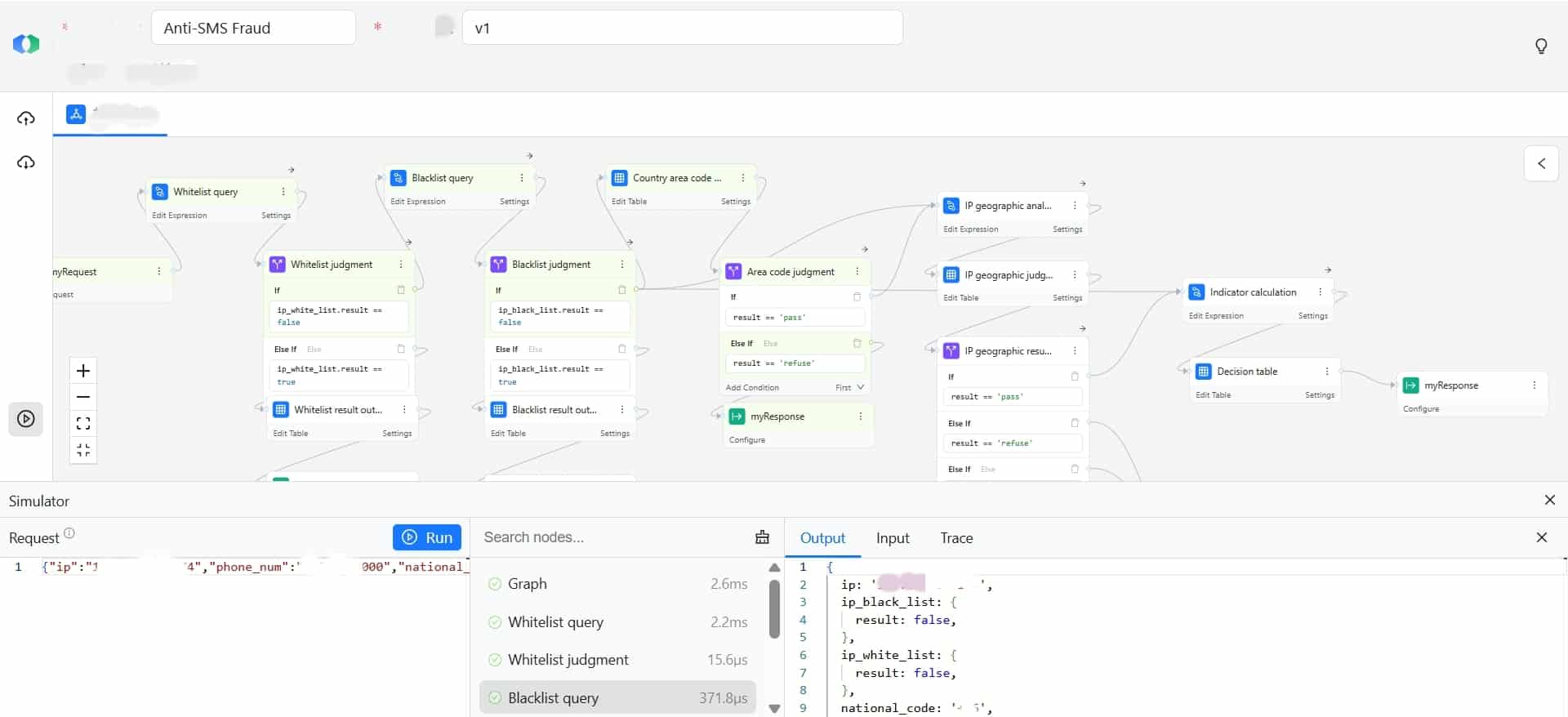
One solution that aligns with these criteria is the GeeTest Business Rules Decision Engine. It provides:
- Scenario-Based Customization: Configure detailed rules for risk, pricing, access control, and compliance without code changes
- Real-Time Decisioning: Supports high-volume, low-latency execution
- Rule Governance: Versioning, audit trails, and approval workflows
- Modern Integration Patterns: API-first, microservices, cloud-native support
- Professional Support: Dedicated services for integration, optimization, and scaling
By evaluating solutions that address flexibility, performance, governance, and integration, enterprises can build a robust decision-making infrastructure aligned with business needs in 2026.
Conclusion: Building Rule-Driven Businesses in 2026
Rule engines are foundational components that enable enterprises to automate decisions, adapt rapidly to change, and scale business logic without sacrificing control.
In an era where digital interactions occur in real time and threats evolve quickly, decoupling decision logic from application code ensures:
- Faster response to market changes
- Improved operational efficiency
- Stronger compliance and governance
- Better user experiences
By choosing the right rule engine and aligning it with strategic objectives, modern businesses can unlock agility, transparency, and resilience essential for competitive success in 2026 and beyond.