
Takeways
1. How Google reCAPTCHA v3 Works?
reCAPTCHA v3 operates as a background risk-scoring system that evaluates user behavior and returns a probability score rather than directly blocking traffic.
2. Key Features of Google reCAPTCHA v3
Its design emphasizes frictionless verification, action-level assessment, and configurable response logic, allowing websites to adapt enforcement policies based on risk.
3. Use Cases of Google reCAPTCHA v3
reCAPTCHA v3 is commonly applied to high-value workflows such as authentication, transactions, form submissions, and API access to reduce automated abuse without disrupting users.
4. How to Properly Deploy reCAPTCHA v3 for Maximum Impact?
Effective deployment depends on correct action labeling, robust server-side validation, and careful threshold calibration based on real traffic data.
5. Why Does Even a “Perfect” v3 Setup Fall Short Against Modern Bots?
Advanced bots can mimic human behavior, exploit opaque scoring logic, and bypass static defenses, exposing the limits of a purely passive detection model.
6.How to Transition to a More Resilient, Adaptive Defense?
Modern bot mitigation requires active challenge orchestration, economic deterrence mechanisms, environment-level verification, and greater operational visibility.
In the early days of the internet, a simple “Are you a robot?” checkbox was enough to keep the gates secure. But as bots evolved, so did the friction. We moved from distorted text to identifying every traffic light in a 9-box grid, a process that has frustrated users for years.
Enter reCAPTCHA v3. Launched with the promise of being “invisible,” it changed the game by shifting from active challenges to passive risk scoring. But as we move into 2026, many enterprises are discovering that “invisible” does not always mean “invincible.”
In this post, we will dive deep into how reCAPTCHA v3 works, the challenges of the “Score Dilemma,” and why a more adaptive approach is becoming the new standard for bot management.
The Evolution of Google reCAPTCHA: From v1 to v3
Google’s journey reflects the changing nature of bot threats:
- reCAPTCHA v1 (2007): Focused on digitizing books through distorted text entry.
- reCAPTCHA v2 (2012): Introduced the “I’m not a robot” checkbox and image grids like crosswalks.
- reCAPTCHA v3 (2018): Shifted to an invisible background script that assigns a risk score.
- reCAPTCHA Enterprise (2020): Integrated Mobile SDKs for Android and iOS to protect app ecosystems.

What‘s the difference between reCAPTCHA v2 and V3?
| Feature | reCAPTCHA v2 | reCAPTCHA v3 |
| User Interaction | Requires explicit user action (checkbox or image challenge). | Mostly invisible and runs in the background. |
| Verification Method | Challenge-based verification (e.g., selecting images, clicking checkbox). | Risk-based scoring system that evaluates user behavior. |
| Output | Pass or fail result after challenge completion. | Returns a score (0.0–1.0) indicating likelihood of human behavior. |
| User Experience | Can be intrusive and interrupt user flow. | Low friction for most users, but may still trigger challenges for suspicious traffic. |
| Bot Resistance | Increasingly bypassed by advanced bots and CAPTCHA-solving services. | Harder for simple bots but vulnerable to score manipulation and replay attacks. |
| Privacy Impact | Collects behavioral and device data through Google services. | Collects more extensive behavioral and interaction data to generate risk scores, raising stronger privacy concerns. |
| Transparency | Clear when verification happens (users see the challenge). | Opaque scoring logic; users do not know how or why they are scored. |
| Integration Model | Triggered via JavaScript API when user clicks or submits a form, with callback handling required. | JavaScript API returns a score that site owners must interpret and act upon. |
| Decision Logic | Google determines pass/fail through challenge success. | Site owner must define thresholds and actions (block, allow, challenge, review). |
| Use Case Fit | Best for simple forms where visible confirmation is acceptable. | Best for background risk assessment in login, signup, and transaction flows. |
| Failure Handling | User retries the challenge if verification fails. | Low scores require additional verification logic implemented by the site. |
| Accessibility | Visual challenges can be difficult for some users. | More accessible by default due to lack of visual puzzles. |
reCAPTCHA v2 relies on explicit challenges, while v3 replaces visible verification with background risk scoring. Although v3 improves usability, its passive and opaque nature introduces new security and operational challenges for sites facing advanced automation.
How Google reCAPTCHA v3 Works?
reCAPTCHA v3 runs in the background and evaluates user behavior without showing visible challenges. It analyzes interaction signals such as mouse movements, navigation patterns, and browser attributes to estimate whether an action is performed by a human or a bot.
Instead of blocking traffic directly, it generates a risk score between 0.0 and 1.0 for each action. Higher scores indicate more human-like behavior, while lower scores suggest potential automation.
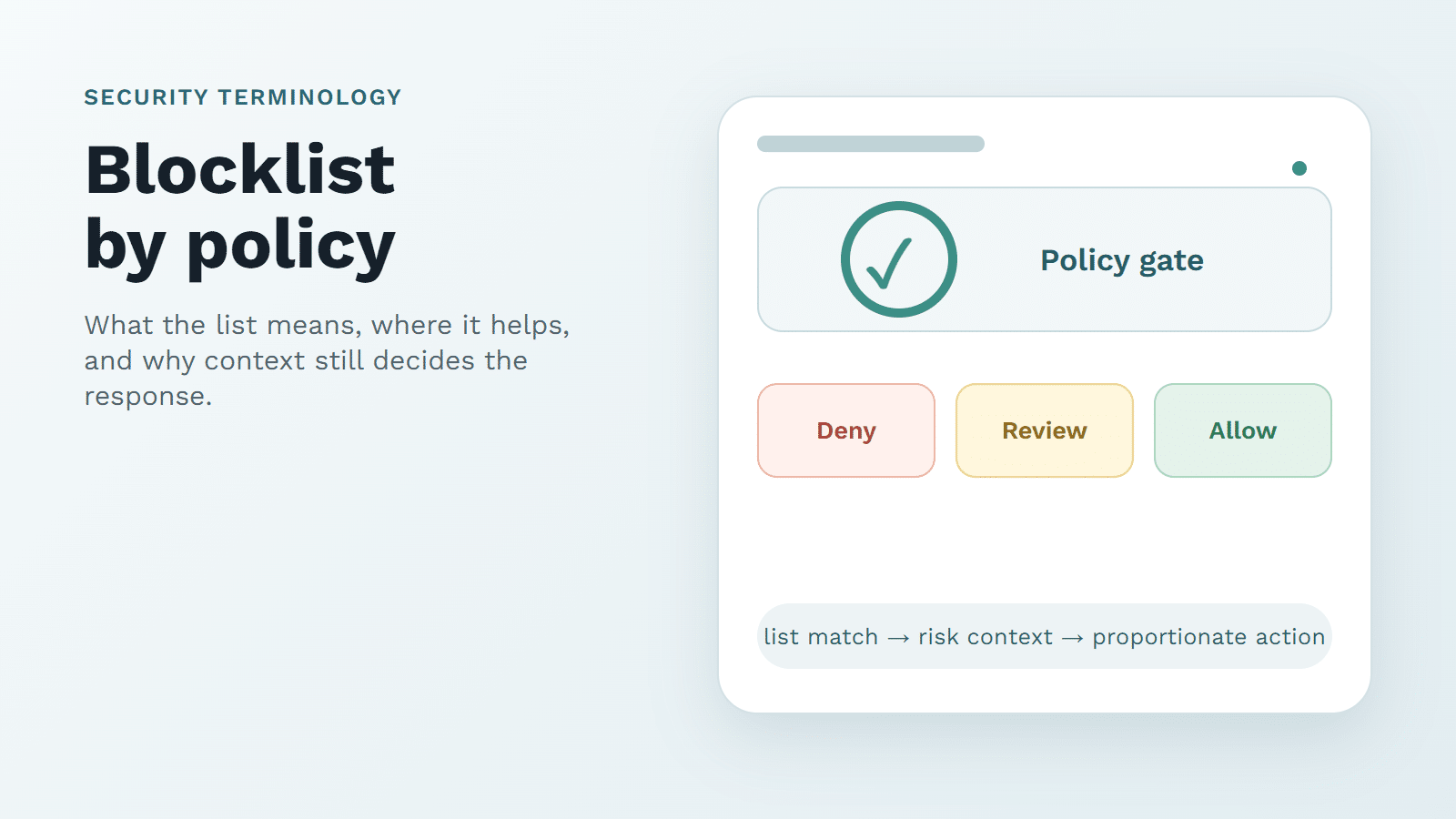
This score is returned to the website, where developers must define how different risk levels are handled. Based on the configured thresholds, users may be allowed to continue normally, flagged for review, or asked to complete additional verification.
Basic flow:
- Client executes reCAPTCHA and generates a token (valid for 2 minutes).
- Token is sent to the server.
- Server calls Google’s verification endpoint to get the score and result.
- Server decides next steps based on score: high scores pass automatically, low scores can trigger additional verification (SMS, email) or rejection.

Key Features of Google reCAPTCHA v3
1. Invisible background verification
reCAPTCHA v3 operates without interrupting users with visible challenges. It runs silently in the background, allowing visitors to interact with a website without solving puzzles or clicking confirmation boxes.
2. Behavior-based risk evaluation
Instead of issuing a simple allow or deny result, reCAPTCHA v3 estimates the likelihood of automated activity based on observed interaction patterns. Each request is evaluated and translated into a probability score that reflects how closely the behavior matches human usage.
3. Action-level assessment
Website owners can define different action labels for key user journeys, such as login, registration, or checkout. This enables reCAPTCHA v3 to assess behavior in the context of specific page types rather than treating all interactions the same way.
4. Configurable response logic
The system allows developers to decide how their application should respond to different risk levels. Based on internal policies, low-risk traffic may proceed normally, while higher-risk activity can be routed to additional verification or restricted altogether.
5. Non-intrusive integration model
Because reCAPTCHA v3 works as an embedded scoring service rather than a direct enforcement tool, it gives development teams more control over how bot detection is incorporated into existing security workflows.
Use Cases of Google reCAPTCHA v3
reCAPTCHA v3 provides a frictionless, score-based security layer that distinguishes legitimate users from automated bots by analyzing their behavior across your website. This enables organizations to protect critical interactions without compromising user experience. Its primary applications are strategically focused on preventing abuse in key digital workflows.
1. User Authentication & Account Security
Protect sign-in, registration, and password recovery endpoints from automated attacks. reCAPTCHA v3 detects and mitigates credential stuffing, brute-force attempts, and bulk account creation, allowing genuine users to proceed seamlessly while challenging high-risk traffic.
2. E-Commerce & Transaction Protection
Safeguard the integrity of financial and commercial operations. Applied to product pages, checkout flows, and payment confirmations, it helps prevent inventory scraping, card testing fraud, scalping of limited-edition items, and fraudulent transactions.
3. Form & Submission Integrity
Defend public-facing forms against spam and data pollution. By screening submissions to contact forms, surveys, lead generation forms, and newsletter sign-ups in the background, it ensures data quality and reduces administrative overhead.
4. Content & Community Moderation
Maintain the authenticity of user-generated content ecosystems. Implemented on comment sections, forums, review platforms, and voting systems, it curbs automated spam, fake reviews, like/dislike manipulation, and coordinated misinformation campaigns.
5. API & Resource Abuse Prevention
Secure digital assets and control infrastructure costs. It guards against data scraping bots that target pricing, content, or user lists, and mitigates specialized attacks like SMS toll fraud (where bots trigger costly automated messages to premium numbers).
6. Marketing & Promotion Fraud Mitigation
Ensure the fairness and effectiveness of campaigns. By monitoring interactions with coupon claims, contest entries, referral programs, and limited-time offers, it blocks bots from depleting resources and skewing results.
How to Properly Deploy reCAPTCHA v3 for Maximum Impact?
Deploying reCAPTCHA v3 is often misunderstood as a simple “copy-paste” task. In reality, because it is invisible and score-based, its success depends entirely on how well you integrate it into your user journey and backend logic.
- Are You Implementing “Actions” for Every Touchpoint? Instead of using a single global key, you must assign unique action tags (e.g., login, checkout, comment) to every critical interaction. This allows Google’s risk engine to learn the specific behavioral patterns for each context, providing much more accurate scoring.
- Is Your Server-Side Verification Robust? Client-side tokens are only half the battle. Your backend must verify every token via the Google API, specifically checking the timestamp to prevent replay attacks and ensuring the action name matches the expected intent.
- Have You Calibrated Your Thresholds Based on Real Data? Avoid the temptation to use a default 0.5 score. The best practice is to run v3 in “observation mode” first, analyzing your traffic logs to find the perfect balance where you catch bots without hindering your genuine users.
- Is There a “Step-up” Plan for Low Scores? Never use a low score as a binary block. A proper deployment includes a fallback mechanism, such as triggering Multi-Factor Authentication (MFA) or a manual review to ensure that legitimate users who are misidentified still have a path forward.
Why Does Even a “Perfect” v3 Setup Fall Short Against Modern Bots?
Even with an optimal deployment, reCAPTCHA v3 operates under inherent architectural constraints. In an era where AI-driven automation is rapidly evolving, a passive scoring model often struggles to keep pace with dynamic, human-mimicking threats.
- The Rise of AI-Powered Behavioral Mimicry: Modern botnets utilize sophisticated algorithms to simulate human scrolling patterns, erratic mouse movements, and realistic page-dwell times. When a bot can pass a behavioral test “in the background,” a passive system lacks the active resistance needed to flush out the automation.
- Headless and Infrastructure-Based Automation: Advanced bot operations rely on headless browsers, emulator frameworks, and static IP or residential proxy pools to maintain consistent, human-like behavior. Without strong environment or device attestation, a passive scoring system struggles to distinguish these automated environments from legitimate users.
- The “Black Box” Interpretability Problem: Google’s scoring model is notoriously opaque. Because it provides a number without the underlying telemetry, security teams cannot determine why a visitor was flagged. This lack of transparency prevents organizations from fine-tuning their defenses against specific, recurring attack vectors.
- Privacy and Regulatory Friction: The extensive cross-site tracking required for behavioral scoring is increasingly coming under fire from privacy frameworks like GDPR and CCPA. Relying on persistent cookies and third-party data collection can create significant compliance hurdles for global brands.
- The Static Nature of Passive Defense: Unlike a challenge-response system, v3 is essentially a static filter. Once an attacker identifies the behavioral pattern required to achieve a high score, the defense becomes a predictable hurdle that can be scaled across massive bot networks without additional friction.
How to Transition to a More Resilient, Adaptive Defense
To overcome the limits of passive scoring, the next evolution of bot mitigation focuses on Active Orchestration. This strategy moves away from “watching and scoring” and toward “challenging and deterring” in real-time.
Utilizing Adaptive Challenge Orchestration: A resilient defense automatically scales the difficulty of its challenges based on the perceived risk. By serving an interactive, non-intrusive puzzle only to suspicious traffic, you preserve a frictionless journey for humans while forcing bots to engage with a dynamic barrier.
Implementing Economic Deterrence via Proof of Work (PoW): Integrating background cryptographic puzzles—known as Proof of Work—forces an attacker’s device to expend significant CPU power. This shifts the economics of the attack, making large-scale scraping or credential stuffing too expensive for bot operators to maintain.
Leveraging Environment Attestation over Simple Behavior: Instead of just analyzing mouse movements, a modern system verifies the integrity of the visitor’s device. Detecting headless browser signatures, emulator footprints, and sensor manipulation provides a layer of hardware-level certainty that scoring alone cannot achieve.
Moving Toward a Transparent Security Dashboard: Effective security requires actionable data. By transitioning to a platform that provides granular insights into every bot detection, teams can move from reactive guessing to proactive strategy adjustment, ensuring they stay one step ahead of the bot-evolution curve.
Conclusion
reCAPTCHA v3 introduced a frictionless approach to bot detection by shifting from visible challenges to background risk scoring. While this model improves user experience, its passive nature makes it increasingly vulnerable to advanced, human-mimicking automation.
As bot behavior becomes more adaptive, effective protection requires more than invisible observation. Combining active challenge orchestration, device-level verification, and transparent security insights enables organizations to move beyond static scoring and toward a more resilient, responsive defense strategy.